Cranberry Beans
Cranberry beans bring a creamy texture and subtly nutty flavor that makes them a home cook’s secret weapon for hearty, satisfying meals.
In a nutshell
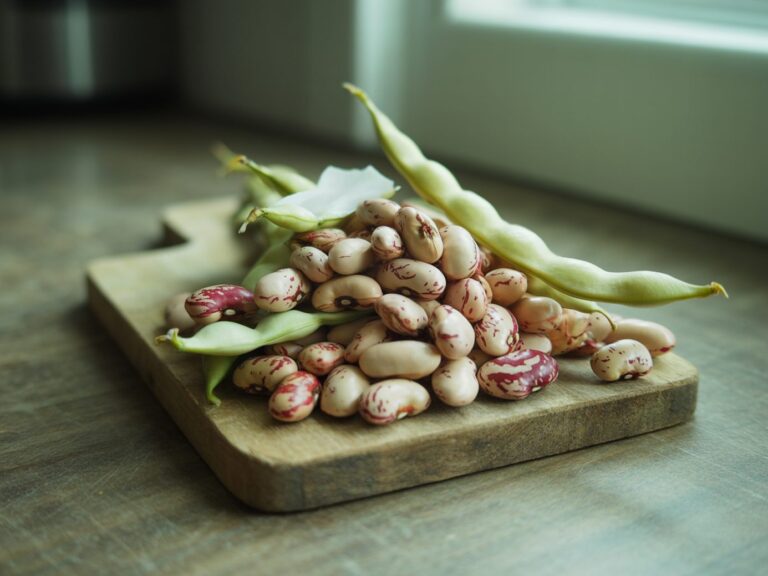
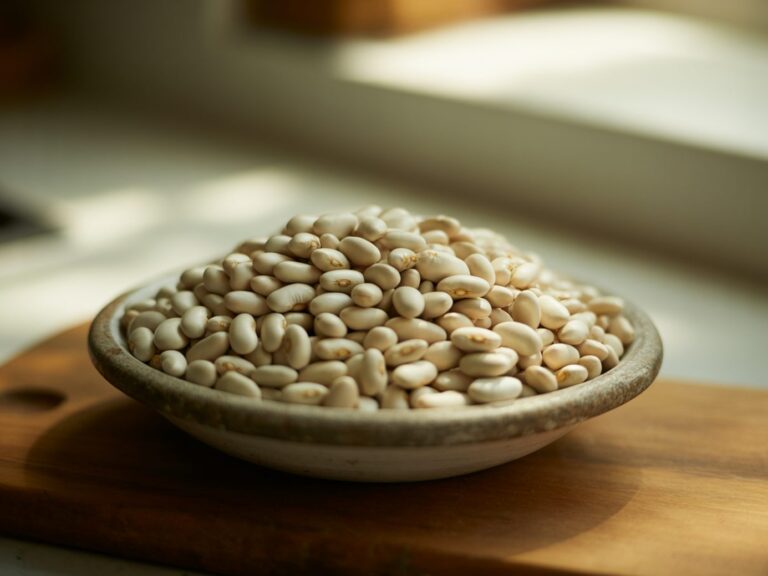
Cranberry beans are a medium-sized shell bean with a beautiful cream-and-red-speckled pod and seed. They cook up velvety smooth with a mild, chestnut-like flavor that absorbs surrounding seasonings beautifully. Though their striking markings fade to a uniform pinkish-tan during cooking, the flavor and texture they deliver are anything but ordinary.
Nutrition
≈ 18 Calories and 0.1g fat per tablespoon.
Cranberry beans are a genuinely impressive source of plant-based protein, delivering roughly 9 grams per 100g cooked — making them a smart choice for vegetarians and meat-reducers alike. Their high dietary fiber content (around 8–9 grams per 100g cooked) supports digestive health and helps sustain a feeling of fullness, while the very low fat content (less than 0.5g) and negligible sodium keep them heart-friendly. They’re also a solid source of folate, iron, magnesium, and potassium, nutrients that support everything from red blood cell production to healthy blood pressure. The combination of protein and fiber gives them a low glycemic impact, making them a smart choice for blood sugar management. Nutrition per 100g via Spoonacular.
Culinary uses & pairings
Cranberry beans shine in slow-cooked soups and stews, where their creamy interior breaks down just enough to naturally thicken the broth while the beans hold their shape. They’re the traditional choice in Italian pasta e fagioli and are equally at home in Portuguese and Latin American bean dishes simmered with aromatics, smoked meats, or chorizo.
Fresh cranberry beans (available late summer) can be shelled and braised or sautéed in far less time than dried, making them a seasonal treat worth seeking out. Cooked and cooled, they also excel in hearty grain salads and warm bean salads dressed with good olive oil, fresh herbs, and a splash of red wine vinegar.
Pairs well with
Substitutions
Buying & storage
When buying dried cranberry beans, look for bags or bulk bins with beans that have vivid cream-and-burgundy speckled coloring — dull, faded, or uniformly brown beans have likely been sitting too long and will take forever to soften and taste flat. Choose beans that are uniformly sized with no cracks or shriveling. Fresh cranberry beans appear at farmers markets and well-stocked grocery stores from late July through September; the pods should feel firm and plump with distinct bean shapes visible inside. Avoid pods that are yellowed, dried out, or moldy. Canned cranberry beans (sometimes labeled borlotti) are a perfectly good pantry shortcut — rinse them well before using.
Types
- Dried Cranberry Beans: The most widely available form year-round; require soaking and a cook time of 45 to 90 minutes. Flavor is fully developed and earthy.
- Fresh Shell Cranberry Beans: A late-summer seasonal find at farmers markets; no soaking needed and they cook tender in just 20 to 30 minutes with a fresher, sweeter flavor.
- Canned Cranberry (Borlotti) Beans: Ready to use straight from the can; a time-saving option that works well in soups, stews, and salads with a quick rinse.
Cooking with cranberry beans tonight?
Find cranberry beans recipes that match your diet — keto, high-protein, vegan, under 30 minutes — and build a shopping list in one tap.
History & origin
Cranberry beans are native to the Americas, where wild ancestors of Phaseolus vulgaris have been cultivated for thousands of years across Central and South America. European explorers brought them back to the Old World in the 16th century, and they became deeply embedded in Italian cooking — particularly in Tuscany and the Veneto — where they’re known as borlotti beans. In the United States, they were a common kitchen-garden bean through the 19th century before largely falling out of mainstream favor as canned navy and kidney beans took over supermarket shelves. Today they’re enjoying a well-deserved revival thanks to interest in heritage legumes, Italian-American cooking traditions, and plant-forward eating.
How it’s made
Cranberry beans are a warm-season annual legume grown much like other shell beans. Seeds are sown directly in the ground after the last frost in well-drained, moderately fertile soil. The plants are bushy and relatively compact, producing elongated pods streaked with vivid red and cream markings that deepen as the beans mature. For fresh shell beans, pods are harvested while still plump and slightly pliable, typically in mid to late summer. For dried beans, the plants are left in the field until the pods dry out and begin to rattle, then the beans are threshed, cleaned, and bagged. No special processing is required — what you see in the bag is essentially the whole, natural seed.
Good to know
- The dramatic red-and-cream speckled pattern on cranberry beans disappears completely during cooking, turning the beans a uniform pinkish-tan — beautiful raw, delicious cooked.
- Despite the name, cranberry beans have absolutely no botanical relationship to cranberries — they were named for the speckled red coloring that resembles the berry.
- In Italy, borlotti beans are so beloved that regional festivals celebrating the autumn harvest are held in their honor.
- Cranberry beans are one of the faster-cooking dried legumes — a good overnight soak can get them tender in under an hour on the stovetop.
- One cup of cooked cranberry beans provides roughly 30% of the daily recommended fiber intake for most adults.