Farro
Farro is the hearty, nutty ancient grain that brings rustic Italian soul to soups, salads, and grain bowls.
In a nutshell
Farro is an umbrella name for three old-world wheat species — einkorn, emmer, and spelt — prized for their chewy bite and rich, nutty flavor. It cooks up tender yet toothsome, holding its shape beautifully in brothy soups and tossed salads. It’s one of the most satisfying whole grains a home cook can keep in the pantry.
Nutrition
≈ 48 Calories and 0.2g fat per tablespoon.
Farro earns its reputation as a nutritious whole grain honestly: it delivers a meaningful amount of dietary fiber — roughly 3 to 4 grams per cooked cup, which is solid for a grain — supporting digestive health and sustained fullness. It provides around 6 to 8 grams of plant-based protein per cooked cup, making it a meaningful contributor to meatless meals. The grain also provides B vitamins, magnesium, zinc, and iron, and its fat profile skews toward heart-friendly unsaturated fats. Because farro is a whole grain with a relatively low glycemic impact compared to refined grains, it helps keep blood sugar levels steadier after meals. Nutrition per 100g via Spoonacular.
Culinary uses & pairings
Farro shines brightest in soups and stews — it’s the backbone of the classic Tuscan zuppa di farro, simmered with white beans, rosemary, and a Parmesan rind until everything becomes deeply savory and thick. It absorbs broth without turning mushy, so leftovers taste just as good the next day. You can also cook it risotto-style (farrotto), stirring in warm stock gradually until it reaches a creamy, porridge-like consistency.
For salads and grain bowls, cook farro in salted water until just tender, drain, and toss it warm or at room temperature with roasted vegetables, fresh herbs, crumbled cheese, and a bright vinaigrette. It holds up well under dressings for hours without getting soggy, making it ideal for meal-prep lunches. Farro also works as a hearty stuffing for vegetables like bell peppers or acorn squash, and it can replace rice in pilafs or be used as a base for breakfast porridge with honey and fruit.
Pairs well with
Substitutions
Buying & storage
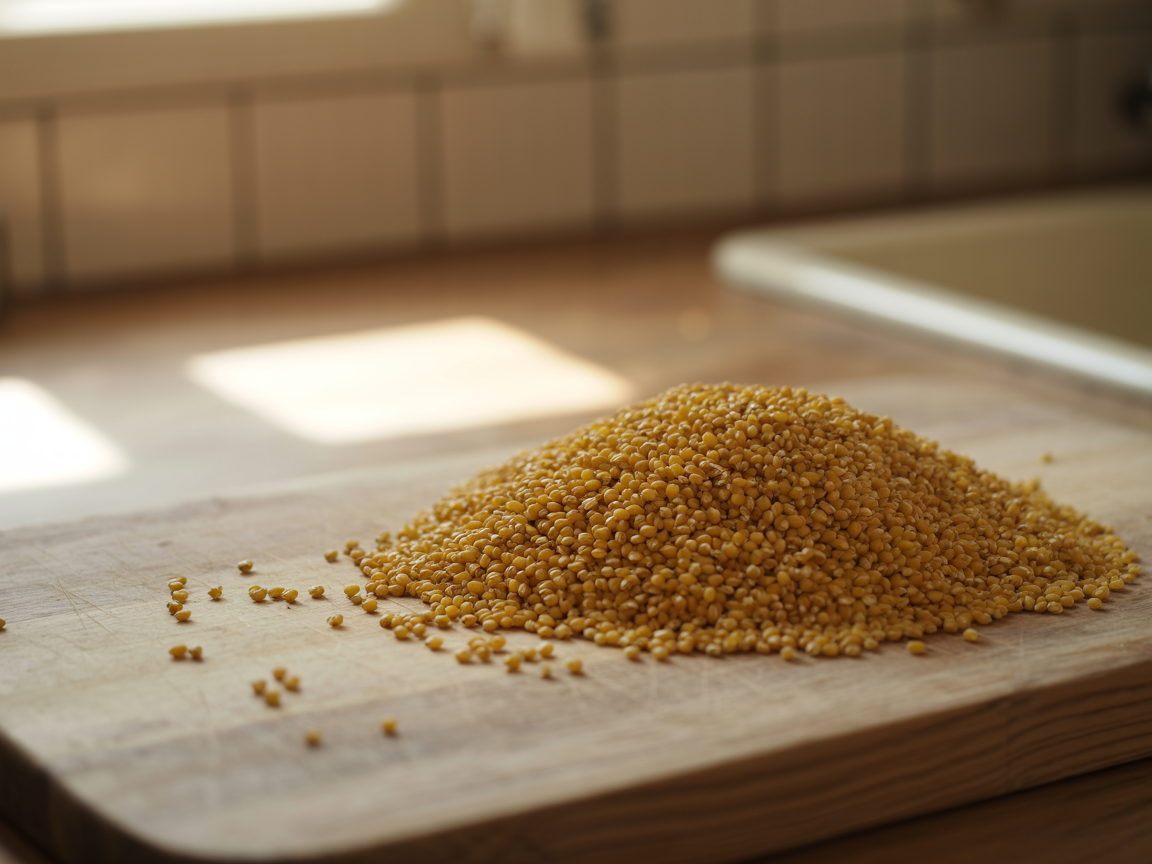
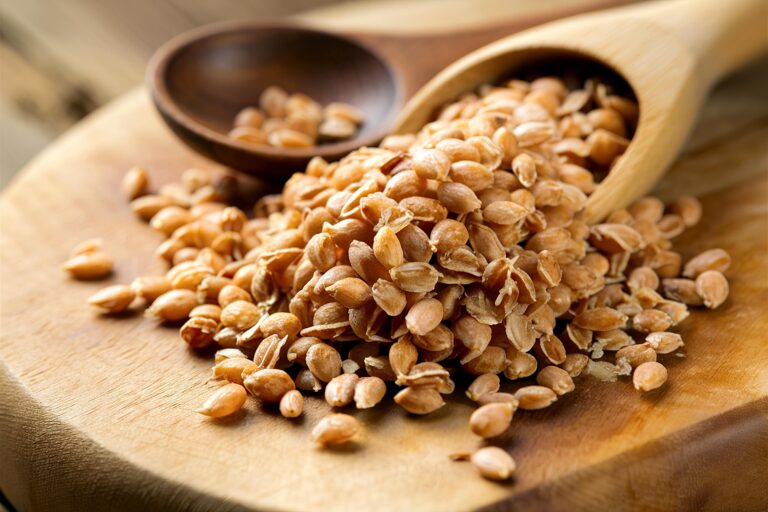
Look for farro in the bulk bins or with the rice and grains at well-stocked grocery stores, natural food stores, or Italian specialty shops. The most common form sold in the US is semi-pearled farro, which has had part of its bran removed and cooks in about 25 to 40 minutes — check the label, because semi-pearled and whole farro look similar but whole farro can take up to an hour. Whole farro delivers the most fiber and nutrients, while semi-pearled splits the difference on nutrition and cook time. Pearled farro, with its bran fully removed, is the quickest-cooking option at around 20 to 30 minutes. Avoid bags with a dusty, stale smell or any sign of moisture.
Types
- Whole farro: The bran and germ are fully intact, giving maximum fiber and nutrients; benefits from soaking overnight and simmers for 45 to 60 minutes.
- Semi-pearled farro: Partially milled — some bran remains — striking a balance between nutrition and convenience; cooks in about 25 to 40 minutes without soaking.
- Pearled farro: Bran fully removed; the quickest-cooking type at around 20 to 30 minutes and widely available in US stores, though lower in fiber than whole or semi-pearled.
- Einkorn (farro piccolo): The smallest of the three farro species with a slightly sweeter, more golden flavor; less common but prized by artisan bakers and grain enthusiasts.
- Emmer (farro medio): The most widely grown and sold farro species in Italy and the US; what most recipes mean when they simply say ‘farro.’
- Spelt (farro grande): The largest-kerneled farro species; often sold simply as spelt in US stores and has a mild, slightly sweet flavor.
Recipes using farro
5 recipes across our recipe sites use farro. A few favorites:
Cooking with farro tonight?
Find farro recipes that match your diet — keto, high-protein, vegan, under 30 minutes — and build a shopping list in one tap.
History & origin
Farro is one of the oldest cultivated grains on earth, with evidence of its domestication in the Fertile Crescent stretching back more than 10,000 years. It fed the armies of ancient Rome — legionaries carried emmer wheat as a staple ration — and remained a cornerstone of peasant cooking across central Italy, particularly in Tuscany, Umbria, and the Garfagnana valley, which still holds a protected geographical indication (IGP) for its local emmer. As modern high-yield wheat varieties took over in the 20th century, farro fell out of widespread use, but it staged a comeback in the 1990s as chefs and health-conscious eaters rediscovered its flavor and nutritional depth.
How it’s made
Farro is a hulled wheat, meaning the outer husk clings tightly to the grain and must be removed after harvest — a trait that actually helped protect it from pests and disease for millennia. After hulling, the grain is cleaned and sorted, then either sold as whole farro or run through a pearling machine that abrades away part or all of the bran layer. Semi-pearled and pearled farro cook faster and have a longer shelf life, while whole farro retains all of its nutritional components. No fermentation, roasting, or chemical processing is involved — it’s as close to field-to-table as a shelf-stable grain can get.
Good to know
- Roman soldiers relied heavily on emmer wheat as a dietary staple, and the Latin word far (referring to emmer) is the root of the word farro.
- Despite containing gluten, many people with mild wheat sensitivities report tolerating farro better than modern bread wheat, possibly because its gluten structure is different; it is not safe for those with celiac disease.
- The Garfagnana region of Tuscany has produced IGP-certified farro since 1996, making it one of the few grains with a European protected geographical indication.
- One cup of cooked farro contains roughly 200 calories and provides more fiber and protein than the same amount of cooked white rice.
- Farro’s starchy exterior releases enough natural starch during cooking to help thicken soups and create a creamy texture in farrotto without adding any cream or butter.