Grits
Grits are the South’s most beloved comfort grain, turning a humble bowl into something deeply satisfying with very little fuss.
In a nutshell
Grits are coarsely ground dried corn, a staple of Southern cooking with roots stretching back to Native American cuisine. They cook up into a creamy, porridge-like base that works equally well at breakfast with butter and eggs or at dinner loaded with shrimp and smoky bacon. Their mild, faintly sweet corn flavor makes them one of the most versatile grains in a home cook’s pantry.
Nutrition
≈ 50 Calories and 0.2g fat per tablespoon.
Grits are primarily a complex carbohydrate food, delivering sustained energy from their dense starch content. They provide a modest but real hit of plant protein — around 8 to 9 grams per 100 grams dry — which adds up meaningfully when you serve a generous portion. Stone-ground and whole-grain versions retain more of the corn’s natural B vitamins (especially niacin and thiamine) and trace minerals like iron and magnesium than their quick-cook counterparts. Many commercially sold grits are also enriched with added iron and B vitamins to compensate for nutrients lost during processing. Fat content is naturally very low, so the richness in a finished bowl almost always comes from what you stir in — butter, cheese, or cream — rather than the grain itself. Nutrition per 100g via Spoonacular.
Culinary uses & pairings
At breakfast, grits shine cooked low and slow with water, milk, or stock until thick and spoonable, then finished with butter, sharp cheddar, or a fried egg on top. They’re endlessly riffable — stir in roasted garlic, fresh herbs, or hot sauce to match whatever mood you’re in.
At dinner, shrimp and grits is the classic showcase, pairing creamy grits with sautéed shrimp in a savory — often bacon- or tomato-based — sauce. Grits can also be poured into a pan, chilled until firm, then sliced and pan-fried into golden grit cakes that work as a crispy base for virtually any topping, from pulled pork to sautéed mushrooms.
Pairs well with
Substitutions
Buying & storage
For the best flavor, reach for stone-ground grits, which preserve more of the corn’s germ and natural oils, giving you a richer, more complex taste. Check that the package has a recent milling date if shown — stone-ground grits can go rancid faster than processed versions because of their higher oil content. Quick grits and instant grits are more widely available and have a longer shelf life, but they sacrifice flavor and texture for convenience. If you can find grits from a small regional mill (especially ones using heirloom corn varieties), they’re worth every penny for special occasions.
Varieties
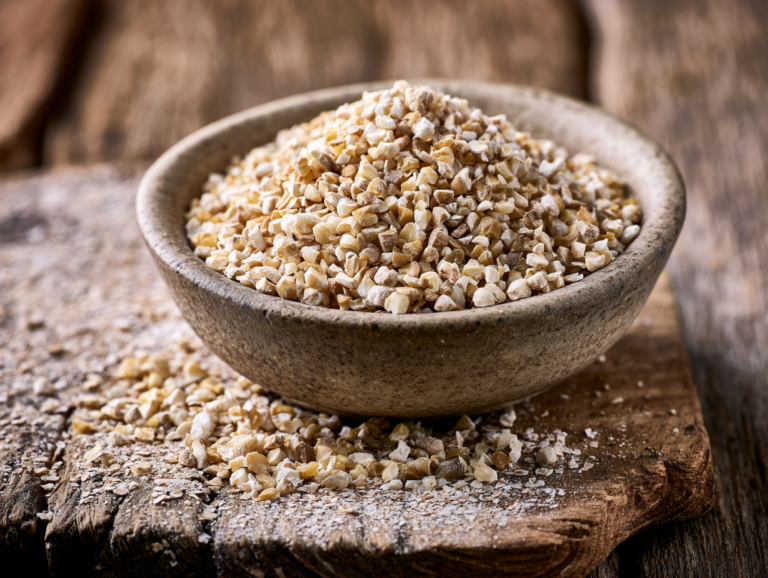
- Stone-Ground Grits: Ground between millstones with minimal processing, retaining the germ and bran for fuller corn flavor. Takes 45 minutes to an hour to cook properly but rewards the patience.
- Hominy Grits: Made from corn that has been nixtamalized — soaked in an alkaline solution — which loosens the hull, boosts nutrient availability, and gives a distinctly earthy, slightly more complex flavor.
- Quick Grits: More finely milled than stone-ground grits for faster cooking, ready in about 5 minutes. Convenient and consistent, though milder in flavor.
- Instant Grits: Pre-cooked and dehydrated, ready in under 2 minutes with just boiling water. The most convenient option, but noticeably blander and more gluey in texture.
- Yellow vs. White Grits: White grits are more traditional in the Deep South; yellow grits have a slightly more pronounced corn flavor and a cheerful golden color. Either works in any recipe.
Recipes using grits
4 recipes across our recipe sites use grits. A few favorites:
Cooking with grits tonight?
Find grits recipes that match your diet — keto, high-protein, vegan, under 30 minutes — and build a shopping list in one tap.
History & origin
Grits trace their origins directly to Native American cuisine, where Indigenous peoples of the American Southeast ground dried corn using stone mills and cooked the meal into porridge. When European colonists arrived, they adopted the practice quickly, and corn mush became a dietary staple throughout the colonial South. The word ‘grits’ likely derives from the Old English word grytt, meaning coarse meal. By the 19th century, grits were deeply embedded in Southern foodways, particularly in the coastal Carolinas, Georgia, and Louisiana. Today they’re so culturally central to the region that South Carolina named grits the official state prepared food in 1976, and the stretch of the American South where they’re most beloved is affectionately nicknamed the ‘Grits Belt.’
How it’s made
Grits begin with field corn (dried dent corn), not the sweet corn you eat off the cob. For stone-ground grits, the dried kernels are run through millstones that crack and grind them into irregular, coarse particles while leaving some germ and bran intact. For hominy grits, the corn is first treated in a process called nixtamalization — soaking in limewater or another alkaline solution — which loosens the hull, boosts nutritional value, and changes the flavor before grinding. Commercial quick and instant grits undergo additional milling and processing to reduce particle size and, in the case of instant grits, precooking and dehydration. Enriched grits then have iron and B vitamins added back before packaging.
Good to know
- South Carolina declared grits the official state prepared food in 1976 — one of the few US states to honor a grain dish with that distinction.
- The word ‘grits’ is grammatically plural, and in everyday Southern speech it’s typically treated as plural — ‘the grits are ready’ — though singular usage does occur informally.
- Nixtamalization, the alkaline process used to make hominy grits, was developed by Mesoamerican civilizations thousands of years ago and dramatically improves the body’s ability to absorb niacin from corn.
- Grits and Italian polenta are both made from dried ground corn, but the two culinary traditions developed independently — polenta from flint corn varieties common in Europe, grits more often from dent corn varieties in the American South.
- The term ‘Grits Belt’ is used to describe the region of the American South where grits remain a daily staple, roughly spanning from Texas through the Carolinas.