Kale
Kale is the leafy green that earns its superfood reputation every single time it hits your plate.
In a nutshell
Kale is a hardy, dark leafy green in the cabbage family that packs serious nutrition into every rugged, crinkled leaf. It holds up beautifully to heat, yet with a little massaging it softens enough to eat raw. Whether you roast it into crispy chips or stir it into a winter soup, kale delivers bold flavor and staying power.
Nutrition
≈ 5 Calories and 0.2g fat per tablespoon.
Kale is genuinely one of the most nutrient-dense vegetables you can put in your cart. It is an exceptional source of vitamin K — a single cup can deliver several times the daily requirement — which plays a key role in blood clotting and bone health. It is also loaded with vitamin C, vitamin A (as beta-carotene), and manganese. Despite its very low calorie count, it offers a notable hit of plant-based protein and an impressive amount of fiber relative to its carbohydrate content, making it exceptionally filling. Kale contains antioxidants like quercetin and kaempferol, compounds linked to reduced inflammation, and its lutein and zeaxanthin content supports long-term eye health. The modest healthy fat content helps your body absorb those fat-soluble vitamins more effectively. Nutrition per 100g via Spoonacular.
Culinary uses & pairings
Raw kale shines when treated right. Massaging the leaves with a little olive oil, lemon juice, or salt for two to three minutes breaks down the tough cell structure, turning it tender and slightly sweet — perfect for hearty salads that won’t wilt by lunchtime. Chop it finely and toss it with grains, roasted vegetables, or citrus-based dressings, and it holds its own for hours in the fridge, making it a meal-prep champion.
When cooked, kale becomes versatile and deeply savory. Sauté it in olive oil with garlic for a quick weeknight side, stir it into white bean soups or minestrone, blend it into smoothies for a nutrition boost, or toss whole leaves with oil and a pinch of salt and roast at 300°F to 325°F (150°C to 165°C) until they become shatteringly crisp chips. It also stands up well in egg dishes like frittatas and shakshuka, and holds its shape in long-braised dishes far better than more delicate greens.
Pairs well with
Substitutions
Buying & storage
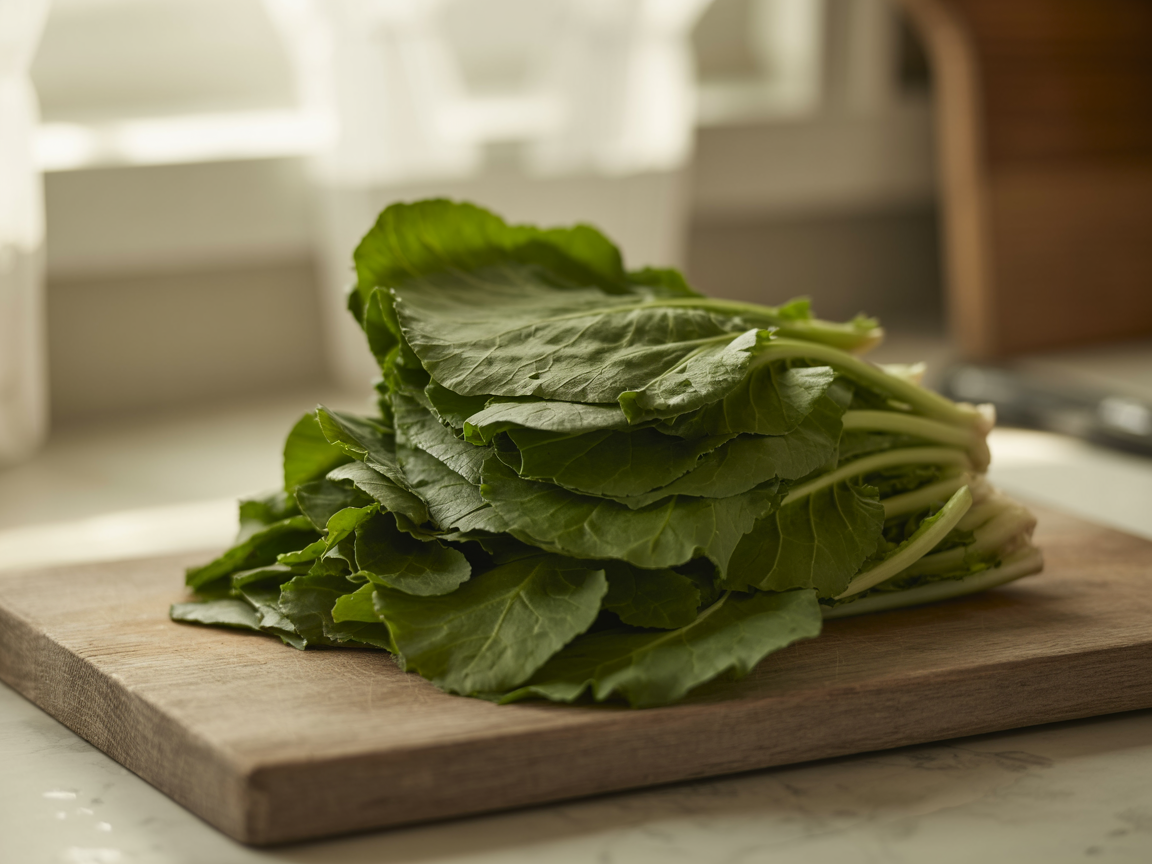
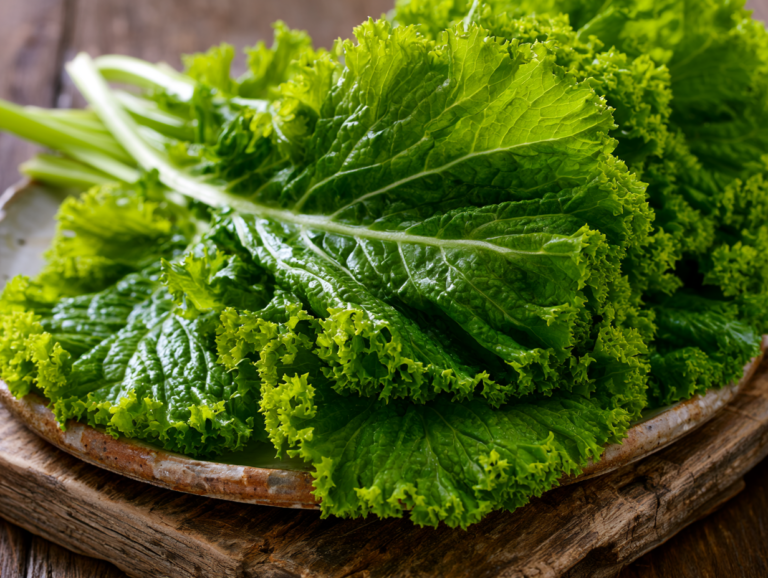
Look for kale with deep, richly colored leaves — dark green, blue-green, or purple depending on the variety — that feel firm and slightly moist, never yellowed, slimy, or wilted at the edges. Smaller, younger leaves tend to be more tender and less bitter, which makes them better suited for raw preparations, while larger mature leaves are ideal for cooking. Avoid bunches with thick, woody stems that take up most of the bunch’s weight. Kale is widely available year-round, but it’s at its absolute best in fall and early winter when a touch of frost sweetens the leaves naturally.
Varieties
- Curly Kale: The most common supermarket variety; ruffled, bright green leaves with a robust, slightly bitter flavor. Works well cooked or massaged raw.
- Lacinato (Dinosaur) Kale: Dark blue-green, bumpy leaves that are more tender and less bitter than curly kale. A favorite for salads, braising, and Italian dishes like ribollita.
- Red Russian Kale: Flat, fringed leaves with purplish-red stems and a sweeter, more delicate flavor. Excellent eaten raw and popular at farmers markets.
- Baby Kale: Immature leaves of any variety harvested young; very tender and mild, sold in salad mix bags and ready to eat straight from the package.
- Redbor Kale: Deeply ruffled and strikingly purple; similar in flavor to curly kale and often used decoratively as well as in cooking.
Recipes using kale
70 recipes across our recipe sites use kale. A few favorites:
Cooking with kale tonight?
Find kale recipes that match your diet — keto, high-protein, vegan, under 30 minutes — and build a shopping list in one tap.
History & origin
Kale has been cultivated for well over 2,000 years, originating in the eastern Mediterranean and Asia Minor where early forms of wild cabbage were first domesticated. It was a staple vegetable across ancient Greece and Rome and spread throughout Europe during the Middle Ages, becoming especially important in Scotland and northern Europe where its cold hardiness made it a reliable winter crop when little else would grow. In Scotland, the word ‘kale’ was historically synonymous with dinner itself — the evening meal was simply called ‘kale.’ It crossed the Atlantic with European settlers and remained a common garden green in the American South and Mid-Atlantic states for centuries. After decades of being overshadowed by more fashionable vegetables, kale experienced a remarkable culinary revival in the early 2000s, eventually becoming one of the defining ingredients of the American health food movement.
How it’s made
Kale is a cool-season biennial plant grown as an annual vegetable. It is direct-seeded or transplanted into well-drained soil and thrives in spring and fall when temperatures stay between 45°F and 75°F (7°C and 24°C). The plant is remarkably cold-tolerant and can survive hard frosts that would kill most other greens; exposure to frost actually triggers the conversion of starches to sugars, noticeably sweetening the flavor. Leaves are harvested from the bottom of the plant upward, allowing the central growing tip to continue producing new growth over many weeks. Commercially, kale is grown in large fields and harvested mechanically or by hand depending on the market; baby kale destined for salad mixes is typically cut young and packaged quickly to preserve its tenderness. Organic production is widespread given kale’s relatively low pest pressure compared to other brassicas.
Good to know
- A single 100g serving of raw kale contains more vitamin C than the same amount of raw orange.
- The word ‘kale’ shares its root with the Old Norse word kál, meaning cabbage, and is a direct relative of modern ‘coleslaw.’
- Kale is a member of the species Brassica oleracea, making it a close botanical cousin of broccoli, cauliflower, Brussels sprouts, and cabbage.
- US kale production surged dramatically in the late 2000s and early 2010s as the ingredient moved from farmers markets into mainstream grocery chains.
- Because of its high vitamin K content, people taking blood-thinning medications like warfarin are often advised to keep their kale intake consistent rather than eliminating it entirely.