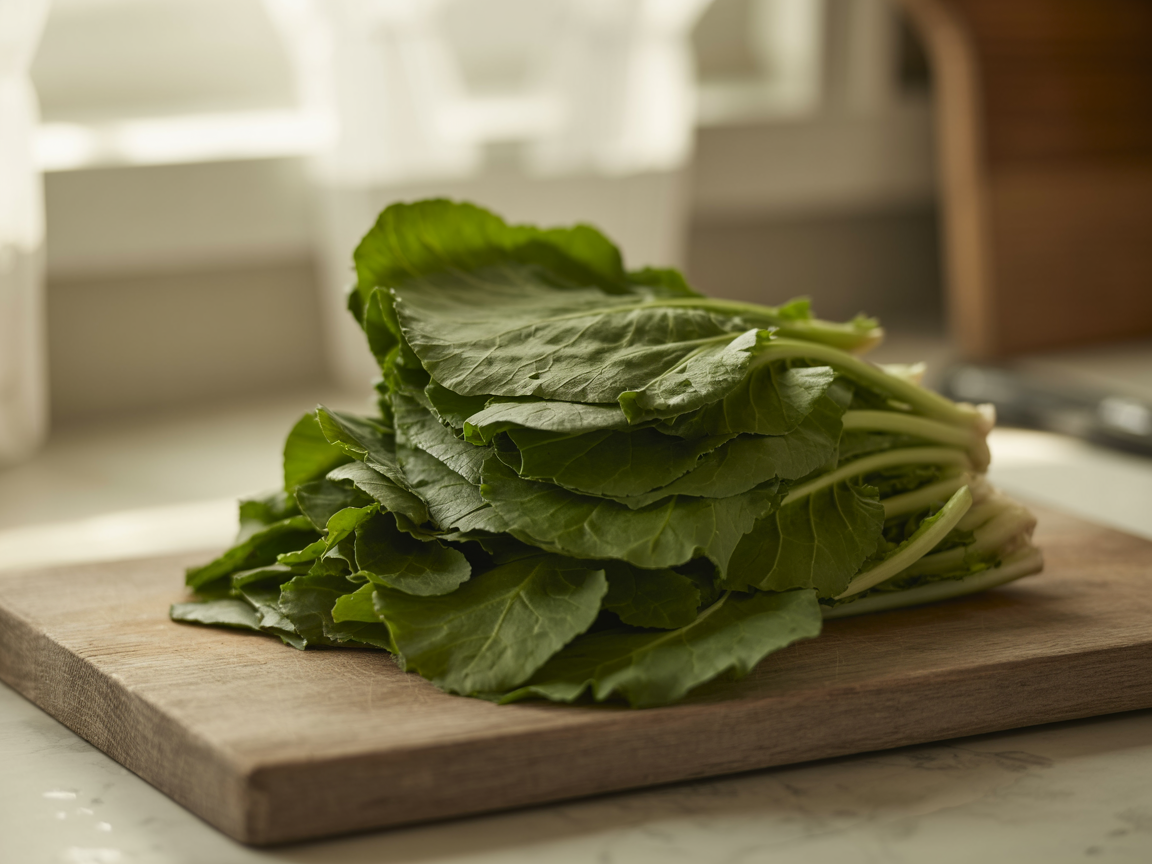
Lettuce
Crisp, refreshing lettuce is the backbone of countless salads and a cool contrast in wraps, tacos, and burgers.
In a nutshell
Lettuce is a leafy vegetable grown in hundreds of varieties, from tender butterhead to sturdy romaine. It’s prized for its mild flavor, satisfying crunch, and near-zero calorie count. Most home cooks reach for it as a salad base, but it’s equally at home as a wrap, a burger layer, or a quick-braised side.
Nutrition
≈ 2 Calories and 0g fat per tablespoon.
Lettuce is one of the lightest foods you can eat, yet it still delivers real nutritional value. It’s a modest source of folate and vitamin K, the latter being important for blood clotting and bone health, and darker varieties like romaine also contribute meaningful amounts of vitamin A in the form of beta-carotene. The small amount of fiber supports digestive regularity, and the naturally high water content—roughly 95%—helps with hydration. Because lettuce contains very little fat overall and sodium is negligible, it fits comfortably into almost any eating pattern. Nutrition per 100g via Spoonacular.
Culinary uses & pairings
Lettuce is most at home in cold preparations. Romaine and iceberg hold up to creamy dressings like Caesar or ranch without wilting, while butterhead and red-leaf varieties shine with lighter vinaigrettes. Whole leaves of iceberg or butter lettuce make sturdy, low-carb wraps for ground meat fillings, Asian-style chicken, or shrimp. Shredded lettuce is a classic topping for tacos, tortas, and burgers, adding a cool crunch against warm, fatty fillings.
Lettuce can also handle gentle heat better than most people expect. Romaine halves brushed with olive oil and grilled for a few minutes develop a slightly smoky, caramelized edge while keeping a tender bite in the center. Butterhead and Little Gem varieties can be braised briefly in butter and chicken stock—a classic French technique—until just wilted and silky, making an elegant side dish that surprises dinner guests every time.
Pairs well with
Substitutions
Buying & storage
Look for heads that feel firm and heavy for their size with leaves that are bright and crisp, free of brown edges, slimy patches, or wilting. Darker outer leaves on romaine or leaf varieties are a good sign of higher nutrient content, not a flaw. At the store, avoid pre-bagged salad mixes with any moisture pooling at the bottom of the bag, as that’s an early sign of decay. Locally grown or farmers-market lettuce is almost always fresher than supermarket heads that have traveled long distances, so it’s worth seeking out when in season in spring and fall.
Varieties
- Iceberg: The classic American crunch lettuce with a very mild flavor and high water content; ideal for shredding on burgers and tacos.
- Romaine: Tall, sturdy leaves with a firm rib and slightly bitter flavor; the go-to for Caesar salads and grilling.
- Butterhead (Boston / Bibb): Soft, cupped leaves with a buttery, mild sweetness; perfect for delicate salads and elegant lettuce-wrap appetizers.
- Red Leaf: Frilly, bronze-edged leaves with a tender texture and mild, slightly nutty flavor; adds color to any salad bowl.
- Green Leaf: Similar to red leaf but fully green; versatile, affordable, and widely available year-round.
- Little Gem: A compact mini-romaine with sweet, crunchy leaves that hold dressing well; popular in restaurant salads and great halved on the grill.
Recipes using lettuce
656 recipes across our recipe sites use lettuce. A few favorites:
Cooking with lettuce tonight?
Find lettuce recipes that match your diet — keto, high-protein, vegan, under 30 minutes — and build a shopping list in one tap.
History & origin
Lettuce is one of the oldest cultivated vegetables in the world, with evidence of its use dating back more than 4,500 years to ancient Egypt, where it was associated with the fertility god Min and depicted in temple carvings. The Greeks and Romans embraced it enthusiastically, often serving it at the start of banquets as an appetite stimulant, though it was also used medicinally. Early varieties were tall and upright—resembling modern romaine—and were quite different from the round, compact iceberg types that dominate American supermarkets today. European explorers and colonists brought lettuce to the Americas in the 15th and 16th centuries, and by the 20th century California’s Salinas Valley had become a leading lettuce-growing region in the United States, shipping the now-iconic iceberg variety across the country packed in ice, which is where that name comes from.
How it’s made
Lettuce is a cool-season annual crop grown from seed directly in the ground or started indoors and transplanted. It thrives in temperatures between 60°F and 70°F (15°C and 21°C) and bolts—sending up a flower stalk and turning bitter—when summer heat arrives. Commercial growers in California and Arizona use precision irrigation and harvest machines that cut heads just above the soil line. Head varieties like iceberg are trimmed, wrapped, and shipped under refrigeration almost immediately after harvest to preserve crispness. Loose-leaf and specialty varieties are often harvested as “cut-and-come-again” crops, where outer leaves are removed while the plant keeps producing. Home gardeners can grow lettuce in raised beds, containers, or even on a sunny windowsill with great success.
Good to know
- Lettuce is about 95% water by weight, making it one of the most hydrating solid foods you can eat.
- The milky sap found in lettuce stems contains compounds including lactucin and lactucopicrin, which have mild sedative properties—lettuce was used medicinally as a sleep aid in ancient and medieval times.
- Iceberg lettuce got its name in the 1920s when California growers started shipping it packed in crushed ice to keep it fresh on cross-country rail journeys.
- Romaine lettuce is significantly more nutritious than iceberg, containing considerably more vitamin A, vitamin K, and folate per serving.
- NASA has grown romaine lettuce aboard the International Space Station as part of its Veggie plant-growth experiments, and in 2015 astronauts became the first to eat leafy greens they had grown in space.