Quinoa
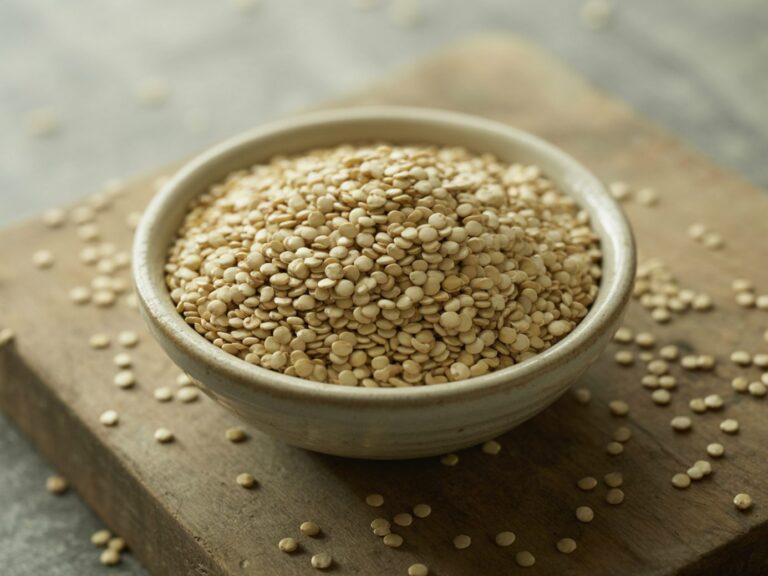
Quinoa is a nutty, protein-packed seed that cooks like a grain and earns a permanent spot in any well-stocked pantry.
In a nutshell
Quinoa is a South American seed treated like a grain in the kitchen, prized for delivering a complete protein with all nine essential amino acids. It cooks in about 15 minutes, turns fluffy and slightly chewy, and absorbs flavors beautifully. Its mild, nutty taste makes it one of the most versatile staples a home cook can keep on hand.
Nutrition
≈ 50 Calories and 0.8g fat per tablespoon.
Quinoa punches well above its weight nutritionally. Its standout feature is a complete amino acid profile, something rare in the plant world, making it especially valuable for vegetarians and vegans. The fat content is notably healthy, with the majority coming from polyunsaturated and monounsaturated fats, including omega-6 and omega-3 fatty acids. It also supplies meaningful dietary fiber to support digestion, along with iron, magnesium, phosphorus, and zinc. The carbohydrate load is moderate for a grain-like staple, and its relatively low glycemic index means it releases energy more steadily than many refined carbohydrates. Nutrition per 100 g.
Culinary uses & pairings
Cook quinoa in a 1:2 ratio with water or broth — bring to a boil, then simmer covered for about 15 minutes until the little white germ rings appear. Fluff with a fork and use it as the base for grain bowls, stuff it into peppers, stir it into soups for added body, or press it into patties and pan-fry for veggie burgers. It also works beautifully in breakfast porridge cooked with milk and topped with fruit and honey.
Quinoa flour is a handy gluten-free addition to baking: blend it with other flours in pancakes, muffins, and breads for a protein boost without a heavy texture. Puffed or toasted quinoa sprinkled over yogurt or salads adds a satisfying crunch, and cold cooked quinoa holds up well in make-ahead salads dressed with vinaigrette, making weekday meal prep genuinely easy.
Pairs well with
Substitutions
Buying & storage
Look for quinoa sold in sealed, opaque packaging so the natural oils stay fresh and you can check for a clean, uniform appearance without broken or discolored seeds. Most supermarket quinoa is pre-rinsed, but if the bag does not say so, plan to rinse it yourself to remove saponins, the naturally bitter coating on the seeds. Buying in bulk bins is fine as long as the store turns over stock quickly; bulk quinoa exposed to air for months can go rancid. Organic options are widely available and worth considering since quinoa is often grown with fewer synthetic inputs anyway.
Varieties
- White (Ivory) Quinoa: The mildest and most neutral-tasting variety, with the fluffiest texture after cooking; the best all-purpose choice for everyday cooking.
- Red Quinoa: Holds its shape better after cooking, making it ideal for cold salads and dishes where you want distinct, separate grains; has an earthier, slightly nuttier flavor.
- Black Quinoa: The boldest in flavor with a slightly sweet, earthy taste; the firmest texture of the three and a striking visual addition to salads and bowls.
- Tricolor (Rainbow) Quinoa: A convenient blend of white, red, and black varieties that offers a balance of textures and flavors with an appealing appearance on the plate.
- Pre-Rinsed Quinoa: Not a distinct variety but a processing designation worth noting — the saponin coating has already been removed, saving you the rinsing step.
Recipes using quinoa
150 recipes across our recipe sites use quinoa. A few favorites:
Cooking with quinoa tonight?
Find quinoa recipes that match your diet — keto, high-protein, vegan, under 30 minutes — and build a shopping list in one tap.
History & origin
Quinoa has been cultivated in the Andean highlands of South America for at least 3,000 to 5,000 years, where it was a dietary cornerstone for Andean civilizations including the Inca, who called it chisiya mama, or ‘mother of all grains.’ It thrived at elevations above 12,000 feet (3,650 meters) where few other crops could survive, making it essential to high-altitude communities in present-day Peru, Bolivia, and Ecuador. Spanish colonizers discouraged its cultivation after the 16th-century conquest, favoring European grains, but indigenous communities kept growing it. Quinoa reached US kitches in a limited way in the 1980s and grew steadily through the 1990s, then exploded in popularity during the early 2000s health-food boom, eventually earning a surge in global demand that transformed it into a major export crop across the Andes.
How it’s made
Quinoa plants grow 3 to 9 feet (about 1 to 2.7 meters) tall and produce large, colorful seed heads at the top. The plants are remarkably hardy, tolerating frost, drought, and poor soils. Seeds are harvested when the plant’s leaves have dropped and the moisture content is low, typically by mechanical combine in commercial farming or by hand in traditional smallholder operations. After harvest, seeds are threshed to separate them from the stalks, then cleaned and dried. The critical processing step is removing saponins, the bitter, soapy compounds in the outer coating, either by washing the seeds with water or by dry abrasion. The cleaned seeds are then sorted, bagged, and shipped — most quinoa consumed in the US still comes from Peru and Bolivia.
Good to know
- Quinoa is technically a seed, not a grain — it is more closely related to beets and spinach than to wheat or rice, making it botanically a pseudocereal.
- NASA studied quinoa in the 1990s as a candidate crop for long-duration space missions because of its complete nutrition and adaptability.
- The United Nations declared 2013 the International Year of Quinoa to highlight its potential role in global food security.
- A single quinoa plant can produce seeds in a remarkable range of colors — over 120 varieties exist in the Andean region alone.
- Despite a massive spike in global demand after 2000, quinoa prices have since stabilized, and it is now grown on multiple continents including the US, Europe, and Australia.