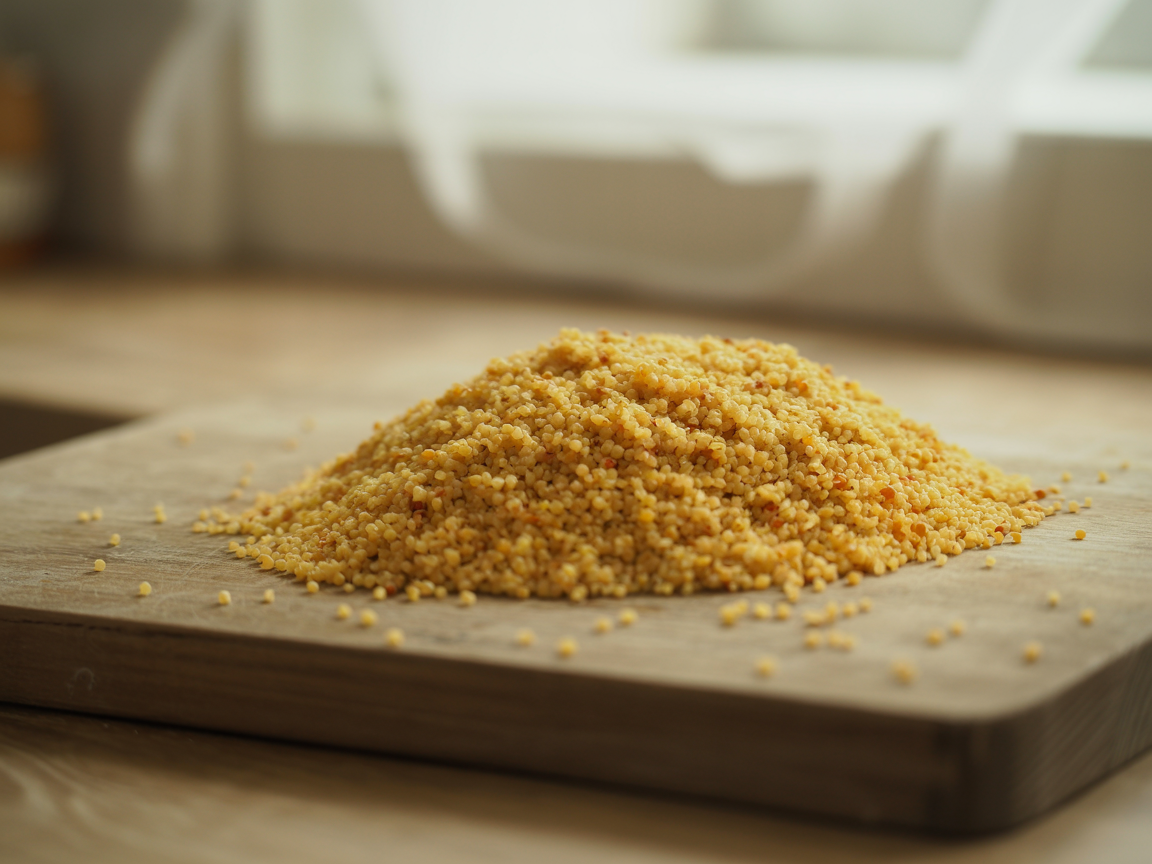
Proso Millet
Proso millet is a quick-cooking, gluten-free ancient grain with a mild, slightly nutty flavor perfect for everyday cooking.
In a nutshell
Proso millet is one of the oldest cultivated grains in the world, valued for its speed — it cooks fully in about 20 minutes. It’s naturally gluten-free, surprisingly protein-rich, and has a gentle flavor that absorbs sauces and seasonings beautifully. Home cooks in the US are rediscovering it as a versatile, nutritious alternative to rice or couscous.
Nutrition
≈ 40 Calories and 0.5g fat per tablespoon.
Proso millet delivers a solid hit of plant protein — around 11 grams per 100g raw — making it one of the more protein-dense grains available to home cooks. Its dietary fiber content supports digestive health and contributes to lasting satiety. The fat profile leans toward polyunsaturated and monounsaturated fats, with very little saturated fat. Proso millet is also a meaningful source of B vitamins, particularly niacin and B6, along with minerals like magnesium, phosphorus, and iron. Because it’s naturally very low in sodium, it fits easily into low-sodium diets. As a gluten-free grain, it’s a safe and nourishing option for people with celiac disease or gluten sensitivity. Nutrition per 100g via Spoonacular.
Culinary uses & pairings
Proso millet cooks up light and slightly fluffy, similar to couscous, which makes it an excellent base for grain bowls, pilafs, and side dishes. Use a 1:2 ratio of millet to water or broth, bring to a boil, then simmer covered for 15 to 20 minutes. Toast the dry grains in a dry skillet for a minute or two before adding liquid to deepen that subtle nutty character. It also works beautifully as a stuffing for peppers or squash, absorbing savory cooking juices without turning mushy.
In baking and breakfast cooking, proso millet shines as a textural add-in. Stir whole or lightly cracked grains into muffin batters, quick breads, or granola for gentle crunch. Cooked millet blends smoothly into porridge — sweeten it with honey and top with fresh fruit for a warming morning bowl. Millet flour, ground from the whole grain, can replace a portion of all-purpose or whole-wheat flour in pancakes, flatbreads, and cookies to add a tender crumb and mild sweetness.
Pairs well with
Substitutions
Buying & storage
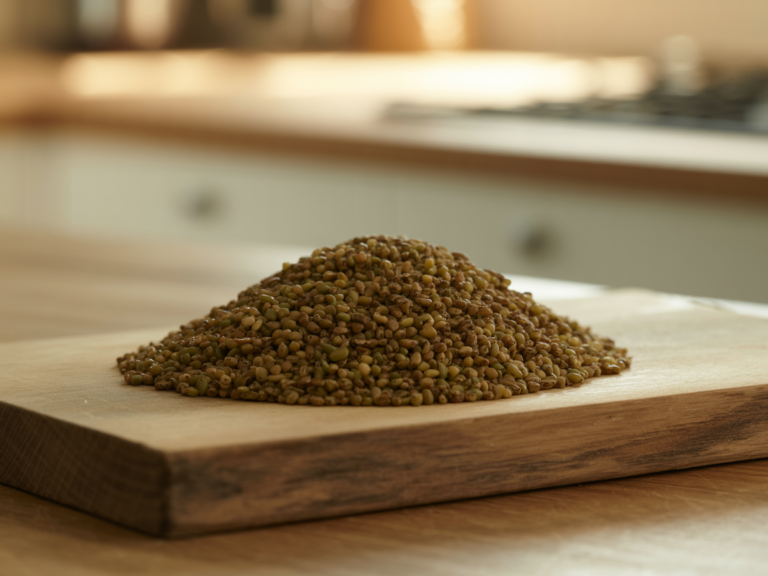
Look for proso millet in the bulk bins or natural-foods aisle of well-stocked grocery stores, co-ops, and online retailers. The grains should appear pale yellow to cream-colored, uniform, and free of any dark or shriveled pieces. Hulled millet is the most common form sold for cooking and cooks up fluffy; unhulled millet retains its tough outer hull and is mostly sold as birdseed, so double-check the label. Buying in bulk can save money, but only purchase what you’ll use within a few months from a store with good turnover to ensure freshness.
Types
- Hulled Proso Millet: The standard form for human consumption; the tough outer hull has been removed, leaving a tender grain that cooks in about 20 minutes and has a mild, slightly nutty flavor.
- Millet Flour: Finely ground from whole proso millet; used in gluten-free baking to add a subtly sweet flavor and tender crumb to breads, pancakes, and cookies.
- Puffed Millet: Whole grains that have been heat-expanded into light, airy puffs; commonly used in granola, breakfast cereals, and energy bars.
Recipes
We do not have recipes featuring Proso Millet in our collection just yet — but you can discover thousands of recipes, filtered to your diet and your pantry, over at Tucker Finder.
Cooking with proso millet tonight?
Find proso millet recipes that match your diet — keto, high-protein, vegan, under 30 minutes — and build a shopping list in one tap.
History & origin
Proso millet (Panicum miliaceum) holds a remarkable place in agricultural history as one of the first cereals ever domesticated by humans, with evidence of cultivation in China dating back at least 10,000 years. From Asia it spread westward through Central Asia and into Europe, where it was a dietary staple long before wheat and rice dominated the table. Ancient Romans cooked it into porridge and flatbreads, and it remained a primary food crop across Europe and Asia well into the Middle Ages. In the United States, millet was historically grown more for livestock feed and birdseed than for human consumption, which is why many American cooks are only now discovering its culinary potential. Today a growing interest in ancient grains, gluten-free eating, and sustainable agriculture has brought proso millet back into the spotlight.
How it’s made
Proso millet is a warm-season annual grass that is remarkably drought-tolerant and fast-maturing, typically reaching harvest in just 60 to 90 days after planting — one of the shortest growing cycles of any grain crop. It thrives in poor, dry soils where other cereals struggle, requiring far less water than corn or wheat, which makes it an important crop in semi-arid regions of Asia, Africa, and parts of the Great Plains. After harvest, the small round seeds are threshed from the seed heads and dried. For human consumption, the tough outer hull is mechanically removed through a hulling process to produce the pale, cream-colored grain sold in stores. The grain may then be milled into flour, puffed with heat, or packaged whole for cooking.
Good to know
- Proso millet cooks faster than almost any other whole grain — a fully cooked, fluffy pot is ready in about 20 minutes with no soaking required.
- It requires significantly less water than corn to produce the same amount of grain, making it one of the most water-efficient crops in agriculture.
- Proso millet is one of the few staple grains that is naturally gluten-free, making it safe for people with celiac disease without any special processing.
- The grain has been found at Neolithic archaeological sites in China dating to approximately 8,000 BCE, making it older than many civilizations.
- Despite being a minor crop in the US, proso millet is widely grown across India, China, Russia, and Africa, where it remains an important food crop for millions of people.