Spinach
Spinach is the leafy green that earns its keep in everything from morning smoothies to weeknight pastas.
In a nutshell
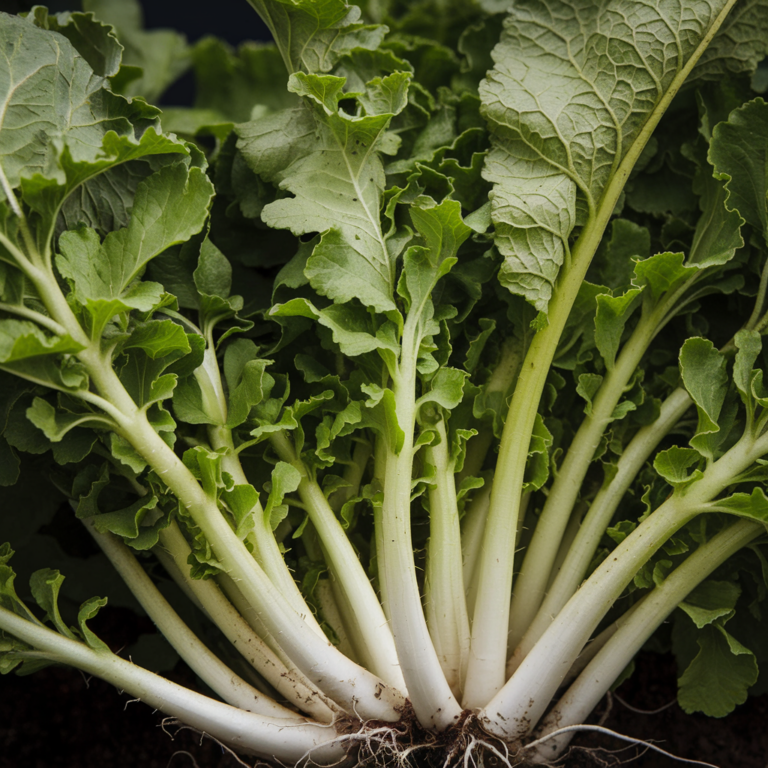
Spinach is a cool-weather leafy green with tender, dark leaves and a mild, slightly earthy flavor that softens further with heat. It’s one of the most nutrient-dense vegetables you can keep in your fridge, delivering serious nutrition for almost no calories. Fresh, frozen, or baby — it’s endlessly versatile and cooks down dramatically in minutes.
Nutrition
≈ 3 Calories and 0.1g fat per tablespoon.
Spinach punches well above its weight nutritionally, packing nearly 3 grams of protein per 100g serving for just 23 calories — a remarkable ratio for a vegetable. It’s an outstanding source of vitamin K, which supports bone health and blood clotting, and delivers generous amounts of folate, vitamin A (as beta-carotene), and vitamin C. The iron content is real but worth noting: spinach also contains oxalic acid, which binds to iron and calcium and reduces how much your body actually absorbs — pairing it with a vitamin C–rich food helps counteract this. It’s also a good source of magnesium and potassium, two minerals many Americans fall short on, and its 2.2g of fiber supports healthy digestion without adding significant carbohydrates. Nutrition per 100g via Spoonacular.
Culinary uses & pairings
Raw spinach — especially tender baby leaves — is the backbone of countless salads, holding up to bold dressings like lemon-tahini or warm bacon vinaigrette without wilting immediately. It’s also a go-to addition to smoothies and juices, where a couple of big handfuls blend in almost invisibly, adding color and nutrition without overpowering fruit flavors. Layered into sandwiches, wraps, or grain bowls, it adds freshness and a satisfying bite.
When cooked, spinach transforms quickly — a large pan of fresh leaves collapses to a fraction of its volume in just two or three minutes over medium-high heat. Sautéed with garlic and olive oil, it becomes a classic Italian-American side dish in minutes. It folds beautifully into pasta, stuffed pastas like ravioli and lasagna, egg dishes like frittatas and quiche, creamed spinach, soups, and Indian dishes like palak paneer. Frozen spinach, well-squeezed of moisture, is the practical choice for cooked applications where texture matters less.
Pairs well with
Substitutions
Buying & storage
Look for spinach with deep, vibrant green leaves that are crisp and show no yellowing, sliminess, or wilting — those are signs of age. Baby spinach sold in clamshell containers is convenient and pre-washed, but bunched mature spinach often has more robust flavor and is usually cheaper per ounce. Give any bagged spinach a sniff before buying; it should smell fresh and green, not sour or funky. At farmers markets in spring and fall, locally grown spinach is noticeably sweeter and more flavorful than supermarket varieties.
Varieties
- Baby Spinach: Harvested young at 3 to 4 inches; tender, mild, and sweet with small flat leaves — the most popular choice for salads and smoothies.
- Savoy: Mature spinach with dark, crinkled, curly leaves and a more robust earthy flavor; holds up well in soups and braises.
- Semi-Savoy: A hybrid with slightly crinkled leaves that’s easier to clean than full savoy; common in supermarket bunches and balances tender texture with good flavor.
- Flat-Leaf (Smooth-Leaf): Broad, smooth leaves that are easiest to clean; widely used for commercial processing and frozen spinach products.
Recipes using spinach
307 recipes across our recipe sites use spinach. A few favorites:
Cooking with spinach tonight?
Find spinach recipes that match your diet — keto, high-protein, vegan, under 30 minutes — and build a shopping list in one tap.
History & origin
Spinach originated in ancient Persia (modern-day Iran) and was carried along trade routes into China by the 7th century AD and into Arab-controlled Spain by the 11th century, where it was known in Arabic as isfānākh. Arab agronomists who wrote extensively about it helped spread cultivation across the Mediterranean during the medieval period. By the 16th century it had become a fashionable vegetable in European courts — Catherine de’ Medici reportedly loved it so much that dishes prepared on a bed of spinach became known as “Florentine,” a culinary term still in use today. It arrived in the United States in the early 19th century and became a commercial crop by the late 1800s, later getting a famous boost in American popular culture when it was associated with Popeye the Sailor starting in 1929.
How it’s made
Spinach is a cool-season annual grown from seed directly sown into well-drained, fertile soil in spring and fall — it bolts (goes to seed and turns bitter) quickly in summer heat, which is why the best-tasting spinach arrives at markets in spring and autumn. Seeds germinate in as little as 5 days in cool soil, and baby spinach is ready to harvest in about 25 to 30 days while mature bunching spinach takes 40 to 50 days. Commercial growers often do multiple cut-and-come-again harvests with machines that trim the leaves just above the growing point. After harvest, spinach is rapidly cooled and washed; baby spinach destined for bags goes through multiple cold-water wash cycles and centrifugal drying before being sealed in modified-atmosphere packaging to extend shelf life. For frozen spinach, leaves are blanched briefly in hot water to deactivate enzymes, then squeezed and frozen in blocks or chopped form.
Good to know
- Spinach is about 91% water, which is why a full pound of fresh leaves wilts down to roughly a cup once cooked.
- The Popeye connection actually did measurably increase spinach consumption among American children in the 1930s — a rare case of a cartoon genuinely changing eating habits.
- A longstanding story held that a 19th-century German scientist’s decimal-point error overstated spinach’s iron content by a factor of ten, but food historians have found little solid evidence this error actually occurred or drove spinach’s iron reputation — the origin of that claim is itself disputed.
- Spinach is one of the few vegetables that NASA has studied for growing on long-duration space missions because of its rapid growth cycle and high nutrient density.
- Oxalic acid in spinach is the reason your teeth sometimes feel chalky or coated after eating a large raw spinach salad — it reacts with calcium in your saliva.