Water Buffalo
Water buffalo is a surprisingly lean, richly flavored red meat that deserves a spot in every adventurous home cook’s rotation.
In a nutshell
Water buffalo meat is a lean, deeply flavored alternative to beef with noticeably lower fat and calories. It comes from domesticated water buffalo raised primarily in Asia, Europe, and increasingly on American farms. The flavor is rich and slightly sweet — closer to grass-fed beef than to game — making it an easy swap in most everyday recipes.
Nutrition
≈ 15 Calories and 0.2g fat per tablespoon.
Water buffalo is a protein powerhouse, delivering over 20 grams of protein per 100 grams while keeping total fat remarkably low at under 3 grams — with saturated fat well below what you’d find in conventional beef. It’s also a solid source of iron, zinc, and B vitamins — particularly B12 and niacin — which support energy metabolism, immune function, and red blood cell production. Because the animals are typically pasture-raised, the meat often contains a more favorable omega-6 to omega-3 ratio compared to grain-finished beef. Nutrition per 100g via Spoonacular.
Culinary uses & pairings
Water buffalo shines anywhere you’d use lean beef. Grill steaks over high heat to medium-rare (around 135 °F / 57 °C) and rest them well, since the low fat content means they can tighten up quickly if overcooked. Ground buffalo makes outstanding burgers, meatballs, and Bolognese — just add a drizzle of olive oil to compensate for the leanness and keep things juicy.
For tougher cuts like chuck or short ribs, low-and-slow braising and slow-cooker methods are your best friend. The connective tissue breaks down beautifully over several hours, yielding tender, deeply savory results in stews, ragùs, and pot roasts. Buffalo also takes well to bold marinades, spice rubs, and smoking, making it a great choice for BBQ-style preparations.
Pairs well with
Substitutions
Buying & storage
Look for water buffalo at specialty butcher shops, farmers markets, and online meat retailers — it’s still a niche product in most US supermarkets. Fresh cuts should be a deep burgundy-red (darker than conventional beef, which is normal) with minimal surface moisture and a clean smell. Ground buffalo should look evenly textured without gray patches. Because most US-raised buffalo is pasture-raised and hormone-free, the labeling often highlights those attributes; verify that the source farm practices responsible husbandry if that matters to you.
Cuts
- Ground buffalo: The most widely available form; great for burgers, meatballs, and meat sauces. Add a little oil to prevent dryness.
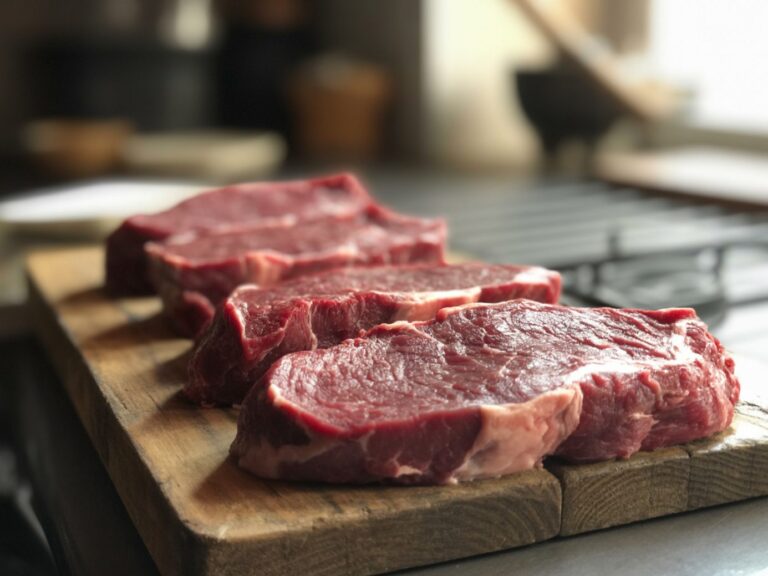
- Ribeye and strip steaks: Prized for their rich flavor; cook quickly over high heat to medium-rare and rest before slicing.
- Chuck roast: A tougher, well-worked cut ideal for low-and-slow braising, pot roast, and slow-cooker stews.
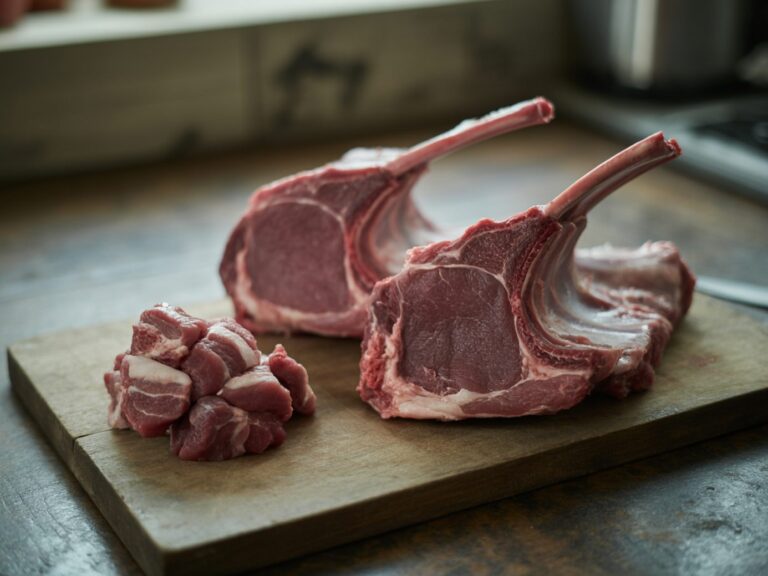
- Short ribs: Richly marbled relative to other buffalo cuts; braise for 3 to 4 hours for fall-off-the-bone results.
- Tenderloin: The most tender cut; extremely lean, so keep cooking time short and use a meat thermometer.
Cooking with water buffalo tonight?
Find water buffalo recipes that match your diet — keto, high-protein, vegan, under 30 minutes — and build a shopping list in one tap.
History & origin
Water buffalo (Bubalus bubalis) have been domesticated for roughly 5,000 years, serving as draft animals, milk producers, and a meat source across South and Southeast Asia, the Indian subcontinent, and later the Mediterranean — particularly Italy, where buffalo mozzarella became iconic. Commercial water buffalo farming in the United States began in earnest only in the late 20th and early 21st centuries, driven by growing consumer interest in alternative, leaner red meats and artisan dairy products. Today, small ranches in states like Florida, Texas, and California raise water buffalo, positioning the meat as a premium, sustainable protein.
How it’s made
Water buffalo raised for meat in the US are almost exclusively pasture-raised, grazing on grasses and forages across open land with minimal grain supplementation — a management style that naturally keeps the animals active and their meat lean. Because they are hardy and efficient grazers, they require fewer inputs than conventional cattle. They are typically harvested at around 18 to 30 months of age. The carcass is broken down by the butcher much like beef, yielding familiar primal cuts — chuck, rib, loin, and round — though the overall yield of external fat is noticeably lower, which is why proper resting and careful temperature management are so important when cooking.
Good to know
- Water buffalo milk contains more fat and protein than cow’s milk, making it the traditional choice for authentic Italian mozzarella di bufala.
- Despite the similar name, water buffalo and American bison are entirely different species — bison belong to a separate genus (Bison) and are only distantly related to water buffalo (Bubalus) within the family Bovidae.
- Water buffalo can live for 25 years or more, significantly longer than most domestic cattle.
- The animals love to wallow in water and mud, which helps regulate their body temperature since they have fewer sweat glands than cattle.
- Water buffalo account for roughly 5% of global red meat production but are a primary draught animal for rice farming across much of Asia.