Great Northern Beans
Great Northern beans are the quietly dependable pantry staple that makes soups, stews, and dips wonderfully creamy and satisfying.
In a nutshell
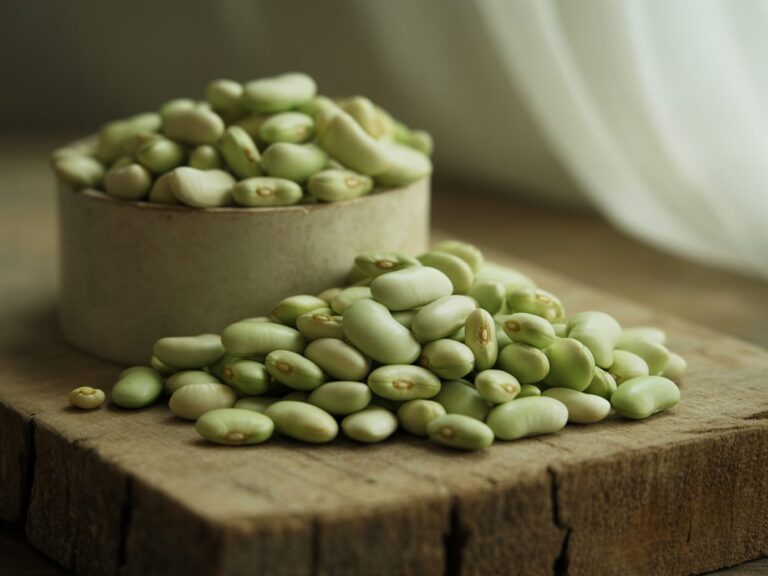
Great Northern beans are medium-sized white beans with a mild, slightly nutty flavor and a smooth, dense texture that holds up well to long cooking. They absorb surrounding flavors beautifully, making them a favorite in everything from classic Senate bean soup to rustic Italian-style stews. Affordable, versatile, and nearly fat-free, they’re one of the hardest-working beans in a home cook’s pantry.
Nutrition
≈ 16 Calories and 0.1g fat per tablespoon.
Great Northern beans deliver an impressive nutritional punch for a food so mild and unassuming. With roughly 8 grams of plant-based protein and about 7 grams of dietary fiber per 100-gram cooked serving, they support muscle maintenance and digestive health while keeping you full longer. The fiber is a mix of soluble and insoluble types, which helps regulate blood sugar and supports heart health by lowering LDL cholesterol. They’re virtually fat-free, naturally very low in sodium, and supply meaningful amounts of folate, iron, magnesium, and potassium — nutrients that many Americans fall short on. Their low glycemic impact makes them a smart choice for people managing blood sugar levels. Nutrition per 100g via Spoonacular.
Culinary uses & pairings
Great Northern beans shine in soups and stews where their firm-yet-creamy texture holds together through long simmers without turning to mush. They’re the classic choice for Senate bean soup, pasta e fagioli, and hearty ham-and-bean soups — just add aromatics, a ham hock or smoked turkey leg, and let them do their thing. They also work beautifully in slow cooker and Instant Pot recipes since they absorb braising liquids and smoky flavors deeply.
Mashed or blended, Great Northerns become an incredibly creamy base for white bean dips and spreads — think of them as a budget-friendly alternative to cannellini for a garlicky, lemon-spiked dip alongside crudités or pita. They can also stand in for chickpeas in grain bowls, be stirred into pasta dishes, or be puréed into sauces and soups to add body and creaminess without dairy.
Pairs well with
Substitutions
Buying & storage
You’ll find Great Northern beans dried or canned in virtually every US grocery store, usually in the rice and beans aisle. Dried beans give you the most control over texture and sodium, so look for bags with a recent harvest date — older dried beans take longer to cook and can stay stubbornly tough. The beans should look uniform, smooth, and creamy-white with no shriveling or discoloration. For canned, choose a brand with low or no added sodium and check that the can isn’t dented or bulging. Organic options are widely available if that matters to you.
Recipes
We do not have recipes featuring Great Northern Beans in our collection just yet — but you can discover thousands of recipes, filtered to your diet and your pantry, over at Tucker Finder.
Cooking with great northern beans tonight?
Find great northern beans recipes that match your diet — keto, high-protein, vegan, under 30 minutes — and build a shopping list in one tap.
History & origin
Great Northern beans are a variety of Phaseolus vulgaris — the common bean — which was domesticated in the Americas thousands of years ago and was a dietary cornerstone for many Indigenous peoples long before European contact. The specific Great Northern variety was developed and named in the northern Great Plains of the United States in the late 19th century, where it thrived in the region’s climate and became a commercial staple. By the early 20th century it had earned its place in American kitchens coast to coast, famously becoming the bean associated with the U.S. Senate’s storied bean soup, a dish that has appeared on the Senate dining room menu nearly every day for well over a century, though the exact date of origin and the rule mandating it are both disputed.
How it’s made
Great Northern beans are a dry shell bean, meaning the pods are left on the plant until the beans inside are fully mature and the pods have dried out in the field. Once the plants dry down, they’re mechanically harvested, threshed to separate the beans from the pods, then cleaned, sorted by size, and inspected for quality. The dried beans are then packaged as-is or further processed into canned beans — for canning, they’re soaked, partially cooked, sealed in cans with water and sometimes salt, and then pressure-cooked inside the sealed can to ensure food safety and a shelf-stable product.
Good to know
- The U.S. Senate bean soup, made with navy or Great Northern beans and ham, has been served in the Senate dining room nearly every single day for well over a century — though the exact origin story is disputed.
- Despite their name, Great Northern beans are grown primarily in Michigan, Nebraska, and the Dakotas, not the far north.
- One cup of cooked Great Northern beans provides roughly 45% of the daily recommended intake of folate, a B vitamin critical for cell function and pregnancy health.
- Dried Great Northern beans roughly double in size after soaking and cooking, so 1 cup dry yields about 2 to 2½ cups cooked.
- Great Northern beans contain resistant starch, a type of carbohydrate that acts more like fiber in the body, feeding beneficial gut bacteria and helping with blood sugar regulation.